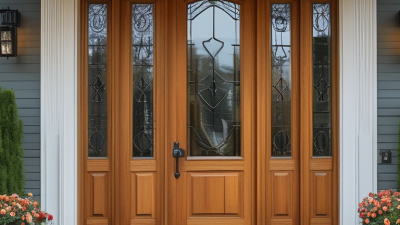
Buying a Wooden Door for an international project is rarely a simple style decision. It involves climate, construction quality, shipping risks, and long-term maintenance.
Frank Lloyd Wright, an influential architect and authority on timber design, said, “Wood is universally beautiful to man. It is the most humanly intimate of all materials.” That warmth remains visible in a solid oak entrance, especially when afternoon light reveals its grain. Yet beauty alone cannot protect a door from humidity, salt air, or repeated temperature changes.
This guide presents ten practical buying tips for global buyers. It examines wood species, moisture content, core construction, surface finishing, hardware compatibility, measurements, packaging, and supplier communication. Each point aims to support better decisions before payment and installation. Ask difficult questions. Request samples. Check technical drawings. Confirm how the supplier tests warping, coating adhesion, and water resistance.
A cheaper door may become expensive after one rainy season. Sometimes, even an attractive finish hides weak engineering. That is easy to miss.
Experienced buyers should compare performance records, production photographs, inspection procedures, and after-sales support. Regional climate matters greatly. A door designed for a dry inland home may perform poorly beside a tropical coastline. Certifications and test reports should also be checked carefully, because documents can be incomplete or outdated.
The recommendations are practical, not perfect. Every building has different conditions. Still, careful evaluation can reduce avoidable mistakes and help buyers choose a Wooden Door that looks refined, fits accurately, and remains dependable over time.
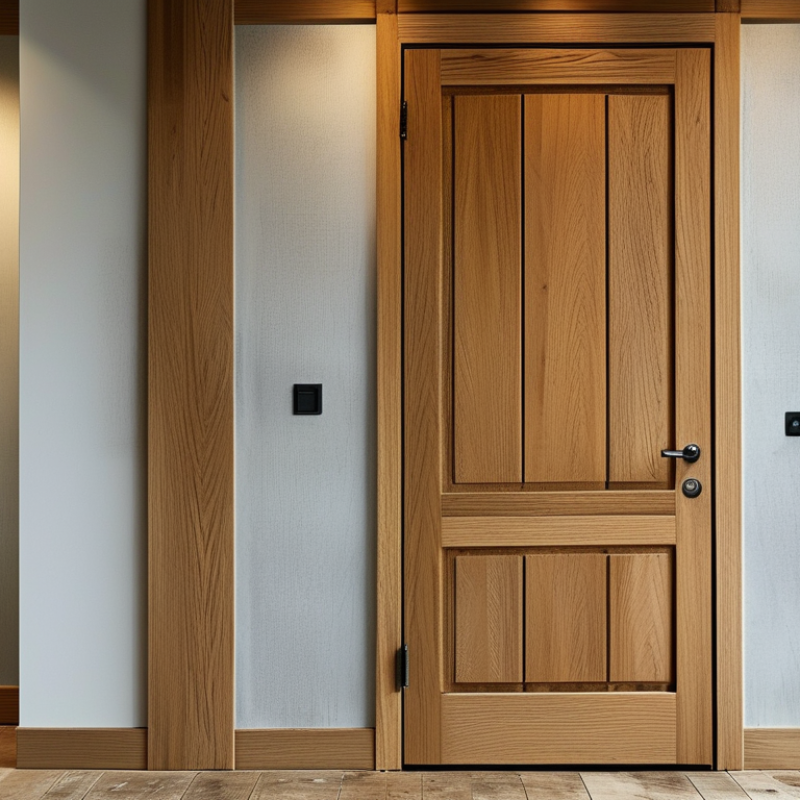
Before requesting quotations, define the door’s exact job and site conditions.
Measure the structural opening, not the old door slab. Record width, height, thickness, swing direction, frame depth, and threshold level. Note whether the wall is masonry, timber, or steel-framed. Expose the door to driving rain, strong sunlight, coastal salt, snow, or high humidity? Write it down.
Energy performance also deserves attention. The 2023 UNEP Global Status Report states that buildings consume about 30% of global energy and create roughly 26% of energy-related emissions. A poorly sealed entrance can weaken the entire envelope. Specify weather seals, thermal-break requirements, glazing limits, and target air leakage. Small details matter.
Performance requirements must match local regulations. State fire resistance, acoustic insulation, security class, accessibility, and wind-load expectations.
A 60-minute fire door is not automatically suitable everywhere. Test methods differ between regions, so request complete laboratory reports and installation limitations. Do not accept a certificate without its scope.
Material conditions are equally important. The USDA Forest Products Laboratory’s Wood Handbook explains that wood changes size as moisture content changes. Ask for the proposed wood species, moisture range, finger-joint details, adhesive type, and finish system.
Keep delivered doors protected from rain and direct sun. Installation should follow the manufacturer’s tolerances, with the frame plumb and the sill fully supported.
Wood moves. That part is easy to forget.
A beautiful specification can still fail when site storage, drainage, or installation is treated as an afterthought. I would leave reasonable adjustment allowances, even when the drawings appear perfect.
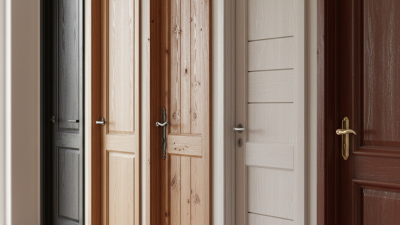
10 Wooden Door Buying Tips for Global Buyers
Wood species strongly affects a door’s stability, appearance, and maintenance needs. Oak offers dense grain and good impact resistance for many interiors. Teak handles humidity well, but responsible sourcing documentation matters. Pine costs less, yet it can dent and move more easily. Engineered timber often reduces warping by balancing layered wood fibers. I would not judge quality by species alone.
Tip 1: Match the species to your climate. In coastal regions, inspect moisture resistance and finishing quality. In dry areas, check how the door manages shrinkage. Ask for moisture readings, wood origin records, and performance data. A beautiful sample proves very little.
Construction details often decide durability. Look for mortise-and-tenon joints, reinforced corners, and stable rails and stiles. For exterior use, exterior-grade adhesive, sealed edges, and a proper weather seal are essential. Solid wood feels substantial, but engineered cores may remain more stable during seasonal changes. Poor finishing can still defeat excellent construction.
Tip 2: Examine the bottom edge, hinge zones, and lock area. These parts reveal weak sealing and uneven assembly quickly. Check the warranty terms carefully, especially for humidity, sunlight, and installation limits. Measurements can also be misunderstood across countries, so confirm the opening size, swing direction, and threshold design in writing. I used to overvalue thick panels; joint quality and moisture control often matter more.
| No. | Buying Dimension | What to Compare | Typical Data and Reliable Benchmarks | Durability Consideration | Recommended Buyer Action |
|---|---|---|---|---|---|
| 1 | Wood Species and Hardness | Compare density, Janka hardness, grain structure, and availability. | Approximate Janka hardness values: pine 690 lbf, Douglas fir 660 lbf, genuine mahogany 800 lbf, teak 1,070 lbf, red oak 1,290 lbf, and white oak 1,360 lbf. Actual values vary by grade and growing region. | Harder species generally resist dents and abrasion better, while stable species may perform better in changing humidity. | Select the species according to traffic level, climate, appearance, and local repair requirements rather than hardness alone. |
| 2 | Solid Wood vs. Engineered Construction | Check whether the door is solid timber, laminated timber, or engineered wood with a natural-wood veneer. | Engineered construction commonly uses bonded wood layers with alternating grain directions. Solid timber doors use continuous or joined boards and can be more sensitive to seasonal movement. | Cross-laminated or engineered components usually reduce cupping, twisting, and splitting compared with wide, untreated solid boards. | Request a cross-section drawing and confirm the core, face veneer thickness, adhesive type, and allowable repair method. |
| 3 | Door Thickness and Mass | Compare overall thickness, weight, structural stiffness, and compatibility with the frame and hinges. | Interior wooden doors are commonly about 35–40 mm thick, while many exterior doors are approximately 44–50 mm thick. Oversized or security-focused designs may be thicker. | Greater thickness can improve stiffness, acoustic performance, and resistance to impact, but it requires stronger hinges and a suitably reinforced frame. | Confirm finished thickness, weight per door, hinge quantity, hardware load rating, and frame compatibility before ordering. |
| 4 | Moisture Content | Compare the timber moisture content with the destination climate and installation conditions. | A commonly used target range for many interior applications is approximately 6–12% moisture content. Exterior or humid-region products may require a different range, often around 8–14%, based on local conditions. | Timber that is too wet may shrink after installation; timber that is too dry may swell in humid conditions and develop joints or cracks. | Request moisture-meter readings at shipment and specify storage, acclimatization, and installation requirements in the purchase documents. |
| 5 | Joinery and Core Structure | Inspect the connection between stiles, rails, panels, and any laminated core components. | Mortise-and-tenon, dowel, finger-jointed, and bonded laminated constructions are common. Long-grain connections and properly reinforced corners generally provide better structural performance than simple end-grain joints. | Strong joinery helps prevent loose joints, panel movement, and racking, especially on wide or heavy exterior doors. | Ask for a construction drawing, joint photographs, adhesive specification, and information about reinforcement around locks and hinges. |
| 6 | Weather Exposure and Biological Resistance | Compare natural durability, treatment, water resistance, and intended exposure level. | Teak and some naturally durable hardwoods typically perform better in exposed conditions than untreated pine or fir. No wood species is completely maintenance-free, and end grain is particularly vulnerable to water absorption. | Rain, ultraviolet radiation, insects, and fungi can cause staining, decay, checking, and coating failure if the door is not properly protected. | For exterior use, specify sealed edges, protected end grain, suitable preservative treatment where needed, and a finish rated for the exposure. |
| 7 | Surface Finish and Edge Sealing | Compare coating type, number of coats, dry-film coverage, sanding quality, and sealing of all six faces. | Common finishes include penetrating oils, stains, clear coatings, and opaque exterior paints. Doors should be coated on the front, back, top, bottom, and side edges; unsealed bottom edges are a frequent moisture entry point. | Balanced coating coverage reduces uneven moisture exchange, swelling, shrinking, ultraviolet damage, and premature coating failure. | Specify the finish system, color tolerance, edge-sealing requirement, maintenance interval, and acceptable surface defects. |
| 8 | Dimensional Stability and Tolerances | Compare allowable bow, twist, cup, warp, joint opening, and size tolerance. | Dimensional movement depends on species, grain orientation, moisture change, and door width. Wider solid-wood components generally move more across the grain than narrow laminated components. | Excessive movement can cause sticking, air leakage, lock misalignment, cracked joints, and failure of the finish or glazing seal. | Include measurable inspection limits in the contract and inspect doors on a flat surface before installation. |
| 9 | Hardware and Reinforcement | Compare hinge type, lock block size, screw holding, weather seals, thresholds, and hardware compatibility. | Heavy exterior doors often require three or more appropriately rated hinges, while taller, wider, or glazed doors may require additional support. Lock and closer loads should be transferred into reinforced structural areas. | Insufficient reinforcement may lead to hinge sag, loose screws, frame distortion, poor closing, and premature hardware failure. | Provide hardware schedules and confirm hinge positions, lock-backset dimensions, closer requirements, and reinforcement locations before production. |
| 10 | Sustainability, Traceability, and Maintenance | Compare legal sourcing, chain-of-custody documentation, repairability, expected service conditions, and maintenance needs. | Responsible purchasing should include species identification, country or region of harvest, legal-sourcing documents, moisture records, and finish-maintenance instructions. Maintenance frequency depends on exposure, but exposed finishes commonly require periodic inspection and renewal. | Traceable material supports consistent quality and responsible sourcing, while maintainable finishes can extend service life and reduce replacement costs. | Request documentation for timber origin, treatment, packaging, installation, cleaning, refinishing, warranty coverage, and replacement components. |
Buying a wooden door internationally starts with accurate dimensions, not attractive photographs. Measure the wall opening, frame depth, slab thickness, threshold, and swing direction. Confirm whether measurements use millimetres or inches. A small conversion error can stop installation.
Request a dimensional drawing before production. It should show tolerances, hinge positions, lock preparation, and clearance beneath the door. On site, installers often discover that the frame fits, but the threshold does not. I once underestimated floor buildup in a renovation plan. That oversight changed the required door height. It was avoidable.
Performance data deserves equal attention. Ask for tested fire resistance, acoustic ratings, thermal values, air leakage, water resistance, and wind-load performance when relevant. The correct requirement depends on the building location and use. Do not accept vague claims such as “weatherproof” without test conditions. Check the report’s product model, test date, laboratory, and applicable standard. Certification should also be traceable to the supplied door, not merely to a similar design. Documents may include factory quality records, treatment details, chain-of-custody evidence, or regional conformity declarations. Standards differ across markets, so a certificate accepted in one country may not satisfy another authority. That point is easy to miss. Ask a local building professional to review the documents before payment.
A reliable wooden door purchase starts with supplier evidence, not attractive photographs. Ask for factory credentials, production capacity, export references, and recent inspection records. ISO 9001 certification can support process control, but it does not guarantee excellent doors. Request a sample with the proposed core, veneer, finish, hinges, and seal design. Compare the sample against approved drawings. Small differences matter.
Moisture control deserves close attention. The USDA Forest Products Laboratory’s Wood Handbook explains that wood changes dimension as its moisture content changes. Ask suppliers to record moisture readings before assembly and shipment. The target should match the destination climate and installation conditions.
Require checks for warping, open joints, surface cracks, coating thickness, and hardware alignment. Use measurable tolerances. “Good quality” is too vague. Include photographs, inspection points, and acceptance limits in the purchase contract.
Customization should cover dimensions, fire performance, acoustic needs, glazing, thresholds, colors, and packaging. Do not assume a supplier can reproduce every design detail consistently. FAO’s Global Forest Resources Assessment 2020 reported that forests declined by about 420 million hectares from 1990 to 2020, despite slower losses recently. Therefore, request legal timber documentation and traceable sourcing records. Independent pre-shipment inspection is useful, especially for first orders. It can still miss installation problems. That is an uncomfortable limitation. Ask for installation guidance, spare components, and a documented complaint process before payment.
10 Wooden Door Buying Tips for Global Buyers
A wooden door quote can look attractive until extra costs appear. Ask whether the price includes the door leaf, frame, hinges, lockset, finish, packaging, and inland delivery. Request separate prices for each item. This makes comparisons more reliable. I have seen buyers choose a cheaper door, then pay heavily for stronger crates and missing hardware. Wood species, moisture content, panel thickness, and surface treatment also affect pricing. Ask for samples or clear technical photos before approving production. Keep a realistic contingency budget for customs charges, local taxes, and unexpected handling fees.
Shipping needs equal attention. Confirm package dimensions, gross weight, loading method, and estimated transit time. A large wooden door may require special handling at the destination port. Check the agreed delivery term and identify who arranges insurance and customs documents. Installation should be discussed before shipment. The wall opening must match the approved drawings, not an old measurement. Allow space for adjustment, especially in humid or cold regions. Use a qualified installer and check the frame for level, plumb, and moisture protection. It sounds fussy. It prevents costly rework.
After-sales support should be written, not promised casually. Confirm the warranty period, response time, replacement process, and availability of hinges, seals, and touch-up materials. Request installation guidance and maintenance instructions in clear English. Keep photos of the delivered package before opening it. One practical weakness remains: some sellers respond quickly before payment but slowly afterward. Test their support with detailed questions first. A dependable supplier should provide traceable documents, realistic answers, and a clear solution when finish defects or transit damage occur.
Review pricing, shipping, installation, and after-sales support before confirming an international order.
The chart shows common planning ranges in calendar days for an international wooden-door project. Actual timing depends on door specifications, production volume, shipping route, customs clearance, destination conditions, and installer availability. Buyers should request a complete landed-cost quotation covering the door, packaging, freight, insurance, duties, installation, and after-sales response terms.