Choosing Wpc Doors for international projects requires more than comparing photographs and quoted prices. Buyers must examine material composition, manufacturing controls, climate suitability, and long-term service support. A door may look like natural wood, yet its performance depends on the WPC ratio, surface coating, internal structure, and edge sealing. Small details matter. A poorly sealed edge can absorb moisture and weaken the panel over time.
This guide introduces ten practical tips for global buyers evaluating Wpc Doors. It considers supplier experience, factory quality systems, product testing, packaging, installation requirements, and warranty terms. Buyers should request physical samples, technical data sheets, recent project references, and clear information about permissible temperature and humidity ranges. Independent test reports can support claims about water resistance, dimensional stability, acoustic performance, and fire behavior. Do not rely on attractive brochures alone.
A polished sample can mislead.
Experienced procurement teams should also review hinge positions, lock compatibility, door weight, frame tolerances, and replacement-part availability. Shipping conditions deserve attention too. Strong cartons, moisture protection, corner guards, and loading photos can reduce avoidable damage. Regional building practices may create unexpected installation problems. The cheapest quotation may become expensive after modifications, delays, or rejected batches.
No supplier is perfect.
Even careful buyers can overlook small risks when deadlines are tight. Therefore, this overview encourages practical verification rather than blind confidence. With documented specifications, consistent inspections, and honest communication, global buyers can select Wpc Doors that perform reliably in real buildings, not merely in product catalogs.
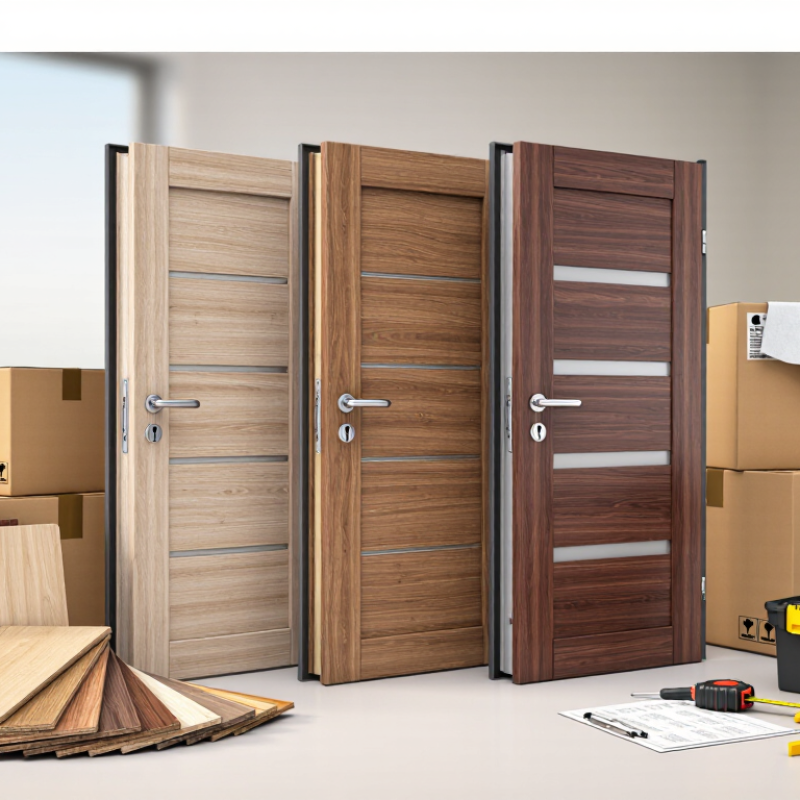
WPC doors usually combine wood fiber or flour, thermoplastic resin, and performance additives. The wood content provides texture and stiffness. The polymer helps limit moisture absorption and routine swelling. Formulas differ widely, however. Some doors feel dense and solid, while others feel lighter and more hollow. Ask for the material ratio, density, surface finish, and core structure.
WPC doors generally suit humid interiors, bathrooms, kitchens, offices, and apartment entrances with sheltered exposure. They resist termites and do not absorb water like untreated wood. They are not automatically waterproof or fire-rated. Check test reports for water resistance, heat expansion, sound insulation, and fire performance. In hot climates, dark surfaces may expand noticeably. Leave the correct installation gap.
Look at hinge reinforcement, screw-holding strength, edge sealing, and hardware compatibility. A well-finished surface should feel even, without sharp edges or visible pinholes. Ask whether the door can be trimmed on site. Some products lose protection after excessive cutting. I once focused too much on the panel appearance and overlooked the frame tolerance. That small mistake caused alignment problems. Measure the opening carefully, allow the door to acclimate, and request installation guidance suited to the local climate. Test documents matter. So does practical support.
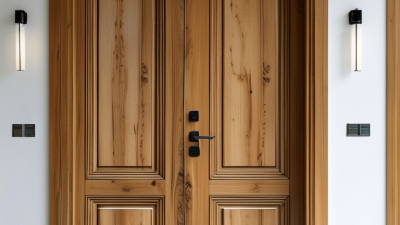
Climate should shape the specification before appearance does. In humid coastal regions, salt air, rainfall, and weak ventilation can expose material weaknesses quickly. Check the door’s moisture resistance, edge sealing, and drainage details. Strong sunlight may also fade dark surfaces or increase heat movement. In colder areas, ask about dimensional stability during repeated temperature changes. A local installer should confirm suitable gaps and fixing methods.
Project conditions matter just as much. A bathroom door needs different protection from a bedroom door. For apartments, acoustic performance and corridor fire requirements may influence the core and construction. Commercial entrances often need stronger hinges, better impact resistance, and easier maintenance. Request test reports that match the intended application. General certificates can sound reassuring but may not answer the real question.
Design decisions should support daily use, not only showroom appeal. Compare surface texture, panel proportions, frame depth, hardware weight, and cleaning needs. Ask for a full-size sample if possible. Small samples hide color variation and edge details. One common mistake is choosing a fashionable dark finish for a sun-exposed entrance. It may look excellent at first, yet demand more care later. I would also leave room for revision after reviewing the site, because drawings rarely capture every practical constraint. Reliable suppliers should explain limitations clearly, provide installation guidance, and keep specifications traceable from sample to shipment.
For global buyers, WPC door quality starts with verifiable evidence, not a polished sample. Ask for the product specification, batch number, factory test report, and certification scope. A certificate should identify the exact door model, materials, dimensions, and testing date. Check whether an independent, accredited laboratory issued it. Do not accept a logo alone. Standards differ across markets, so confirm local requirements with your importer, architect, or authority. This step prevents an attractive door from becoming a customs or installation problem.
Safety testing should match real use. Review fire reaction, smoke performance, formaldehyde or VOC emissions, moisture resistance, impact strength, and hardware durability. For bathrooms or coastal projects, request water absorption data after repeated exposure, not only a short visual test. Inspect the core, edge sealing, hinges, and locking points. Small gaps can admit water. Ask how samples were selected. A report from one carefully prepared door may not represent routine production. Traceability matters: the supplier should connect each shipment to raw-material records and inspection results.
Request a pre-shipment inspection with photographs, measurements, and random carton checks. Compare delivered doors with the approved sample, including color, thickness, weight, and surface finish. Keep written records of every deviation. Perfect paperwork can still hide inconsistent workmanship. This assumption is easy to make. It deserves review. If a supplier cannot explain a failed test or changing material formula, pause the order. Seek independent technical advice. A reliable partner welcomes specific questions and provides corrective-action evidence.
| Tip | Quality Dimension | Relevant Standard or Requirement | What to Verify | Recommended Buyer Action |
|---|---|---|---|---|
| 1 | Confirm the intended application | EN 14351-1 may apply to external pedestrian doorsets in Europe; local building codes may apply to interior doors. | Check whether the door is designed for interior use, exterior exposure, humid areas, or high-traffic locations. Product classification should match the installation environment. | Request the technical datasheet and installation limitations before comparing prices or specifications. |
| 2 | Evaluate material composition | There is no single universal WPC formulation standard. Material disclosure and test reports are therefore important. | Review the wood-fiber or agricultural-fiber content, polymer type, additives, moisture content, density, and whether recycled content is used. | Ask for a controlled material specification and a batch-to-batch quality-control procedure. |
| 3 | Check dimensional stability | EN 15534-1 provides general characteristics and test methods for wood-plastic composites; project-specific door testing may also be required. | Look for results covering water absorption, thickness swelling, linear thermal expansion, and dimensional change after humidity or temperature cycling. | Compare test conditions with the destination climate, especially for coastal, tropical, or freeze-thaw regions. |
| 4 | Verify structural performance | Applicable door and doorset standards may include EN 947, EN 948, EN 1192, or local equivalents, depending on the performance being evaluated. | Request test results for operating forces, torsion, impact resistance, screw retention, hinge performance, and repeated opening and closing. | Ensure the tested door size, core construction, hardware, and fixing method match the proposed product. |
| 5 | Assess fire performance | EN 13501-1 classifies reaction to fire in Europe; ASTM E84 is commonly used for surface-burning characteristics in North America. | Check the exact fire classification, smoke rating where applicable, specimen thickness, surface finish, and whether the result covers the complete doorset or only a material sample. | Do not accept a generic “fireproof” claim. Obtain a current report from an appropriately recognized laboratory. |
| 6 | Review chemical and indoor-air safety | REACH obligations may apply to products placed on the European market. Formaldehyde requirements depend on the materials and destination market. | Request declarations or test reports for restricted substances, formaldehyde emissions where relevant, heavy metals, plasticizers, and hazardous additives. | Confirm that the documentation covers the finished door, not only an individual resin, coating, or raw-material component. |
| 7 | Check weather and moisture resistance | For external doorsets, performance requirements can include watertightness, wind load, and air permeability under EN 14351-1 or comparable local rules. | Review water absorption, accelerated weathering, color change, coating adhesion, seal performance, and resistance to ultraviolet exposure. | Ask for test data using the intended surface color and finish, because dark colors and different coatings can behave differently outdoors. |
| 8 | Inspect glazing and hardware safety | Safety glass may be assessed under standards such as EN 12150 for thermally toughened glass or EN 14449 for laminated glass, where applicable. | Check glass type, edge protection, hinge load rating, lock compatibility, finger-safe clearances, corrosion resistance, and emergency-exit hardware requirements. | Approve the complete door assembly, including glass, frame, seals, hinges, locks, and fasteners—not the leaf alone. |
| 9 | Validate certification and traceability | CE marking is required only when the product falls within applicable European legislation and the relevant conformity route. Other markets may require separate approvals. | Verify the declaration of performance or conformity, certificate scope, laboratory identity, test date, product model, manufacturing site, and batch or lot traceability. | Check certificates directly against the issuing body or official registry where available, and make sure the certificate describes the exact product. |
| 10 | Confirm installation, warranty, and after-sales support | Installation must follow the tested assembly and the destination market’s building requirements; warranty terms should define environmental and maintenance conditions. | Review installation drawings, recommended tolerances, drainage details, compatible sealants, maintenance instructions, spare-part availability, and warranty exclusions. | Order a representative sample or pilot batch, inspect it after installation, and record acceptance criteria before placing a full-volume order. |
Note: Standards and certification requirements vary according to the door type, construction, application, and destination market. Always confirm the current local requirements before import or installation.
Global buyers should compare WPC door suppliers with more than a price sheet. Request production photos, material specifications, test reports, and recent project references. A reliable supplier should explain the WPC formulation, surface layer, moisture resistance, and quality inspection process. Ask how warping, color variation, and damaged edges are handled. Vague answers are warning signs.
Customization can include door size, thickness, surface texture, color, glazing, hinges, locks, and packaging. Send a detailed drawing before requesting a final quotation. Confirm tolerances, drilling positions, hardware standards, and installation conditions. Local weather matters. Coastal humidity, strong sunlight, and seasonal temperature changes may affect performance. Samples help, but one sample cannot represent every production batch. Request a pre-shipment inspection when the order is large.
Compare total costs, not just the factory price. Include tooling, sample fees, packaging, inland transport, freight, insurance, import charges, storage, installation, and possible replacement parts. Check minimum order quantities and payment milestones carefully. A lower unit price may hide slower delivery or weak after-sales support. Ask for a written warranty with clear exclusions and response times. Some buyers also overlook maintenance and future color matching. That mistake can become expensive. A simple cost table, using identical specifications for every supplier, makes differences easier to verify and discuss.
A reliable WPC door begins with installation, not appearance. Confirm that the installer checks the opening for level, plumb, and square. Request written details for expansion gaps, threshold drainage, compatible sealants, and fixing points. These small details matter in humid or freezing climates. The U.S. Department of Energy reports that air leakage can cause 25–40% of household heating and cooling energy use. Poorly sealed doors can therefore weaken both comfort and operating efficiency. WPC formulations differ considerably, so avoid assuming every product performs identically.
Maintenance should be simple, documented, and realistic. Ask for cleaning instructions, approved solvents, hinge lubrication intervals, and replacement procedures for seals. A soft cloth is safer than abrasive tools. Check whether color fading, swelling, hardware corrosion, or surface scratches are covered separately. The 2023 Global Status Report for Buildings and Construction states that buildings used 34% of global energy demand and produced 37% of energy- and process-related carbon emissions in 2022. Longer service life can support better lifecycle value, but only when maintenance records are kept. I have seen buyers overlook this paperwork.
Warranty language deserves careful reading. It should identify coverage periods, installation responsibilities, climate exclusions, and claim evidence. Ask how quickly technical support responds and whether spare panels, seals, and hardware remain available. ISO 15686-1 recommends service-life planning, yet many purchasing decisions still focus only on the initial price. That is a weakness worth questioning. A useful supplier should provide drawings, installation training, inspection photos, and a clear after-sales contact. Test the support process before ordering. Try one technical question. The response often reveals more than a brochure.