



Various door service providers



Purchasing Manager's Technical Manual: How to Correctly Interpret the Thickness, Filler and Fire Resistance Rating of Doors?
Purchasing Manager's Technical Manual: How to Correctly Interpret the Thickness, Filler and Fire Resistance Rating of Doors?
As a purchasing manager, during the process of purchasing door products, one is often troubled by a bunch of technical parameters - how to choose the thickness of the door? What are the differences between different fillers? How should the fire resistance rating be accurately interpreted? These parameters are directly related to the product's usage effect, safety performance and procurement cost. Once they are misinterpreted, it is very likely to plant hidden dangers for subsequent use. Today, we will start from the practical perspective of the industry to help everyone clarify the key points of these core parameters and assist you in making more accurate purchasing decisions.
I. Thickness of the Door: It's not just a number, but the foundation of performance
Many novice purchasers mistakenly believe that the thickness of a door is merely "the thicker, the better", but in fact, the choice of thickness needs to be combined with specific usage scenarios and functional requirements. First of all, we need to clarify the core keyword - the selection of door thickness, whose core is "compatibility". For instance, the doors in indoor office areas mainly focus on sound insulation and privacy. A regular thickness of 40 to 50mm is sufficient to meet the requirements. The entrance doors of commercial buildings or the workshop doors of industrial plants need to take into account anti-theft, impact resistance and load-bearing capacity. Their thickness usually reaches 60-80mm, and in some special scenarios, it even requires a thickness of over 100mm.
In addition, the material of the door will also affect the choice of thickness. The thickness of wooden doors should take into account the stability of the wood to avoid deformation due to insufficient thickness. Due to the relatively high hardness of the material itself, the thickness of metal doors can be appropriately adjusted under the premise of meeting the same performance requirements. It should be noted here that the thickness standards for commercial doors clearly stipulate that the thickness of evacuation doors used in densely populated places must not be less than 50mm. This point must be strictly adhered to during procurement to avoid violating relevant regulations.
Ii. Door Filling: The "Performance Core" Hidden Inside
The filling material of a door is the key to determining its core performance such as sound insulation, heat preservation and fire resistance, but it is also the part that is most easily overlooked. Different types of door fillers have significant differences in applicable scenarios and performance. Special attention should be paid when purchasing. The common door fillers mainly include the following types:
The first type is polyurethane foam. The advantages of this type of filler are good thermal insulation and heat preservation effect, light weight, and relatively moderate cost. It is suitable for indoor insulated doors or ordinary soundproof doors. However, it should be noted that the fire resistance of polyurethane foam is relatively poor and it is not suitable for scenarios with high fire protection requirements. The second type is rock wool. As an inorganic insulation material, rock wool has excellent fire resistance, sound insulation and high-temperature resistance. It is the preferred filling material for fireproof doors and is especially suitable for commercial buildings, hospitals, schools and other places with strict fire protection requirements. The third type is honeycomb paper. This kind of filler is light in weight and low in cost, but its sound insulation and fire resistance performance are average. It is mainly used for economy Interior Doors and is not recommended for public areas or scenarios with safety requirements.
When making a purchase, it is also important to note that some unscrupulous manufacturers may use inferior fillers to pass off as high-quality products, such as using used sponge instead of polyurethane foam. Therefore, during the purchasing process, we need to ask the manufacturers to provide test reports of the fillers to ensure that the products meet relevant standards.
Iii. Fire Resistance Rating: A "hard indicator" of Safety, with Skillful Interpretation
For door products that need to have fireproof functions, the fire resistance grade standard of doors is the core consideration factor during procurement and also the area where misunderstandings are most likely to occur. First of all, we need to be clear that there are differences in fire protection grade standards among different regions. For instance, the commonly used GB standard in China classifies fire doors into Grade A, Grade B, and Grade C, with corresponding fire resistance limits of 1.5 hours, 1.0 hours, and 0.5 hours respectively. However, the commonly used UL standards internationally have different grade classifications. When making a purchase, the fire resistance grade that meets the requirements should be selected in accordance with the regulations of the region where the project is located.
Secondly, when interpreting the grade of fireproof doors, one should not only rely on the labels but also take into account the product's inspection report. Fireproof doors produced by regular manufacturers will all be accompanied by test reports issued by authoritative institutions, clearly marking key information such as the fire resistance rating and fire resistance limit of the product. In addition, it should be noted that the fire resistance rating is not only related to the door itself, but also to the door frame, hardware Accessories and other supporting products. When purchasing, it is necessary to ensure that the entire set of products meets the corresponding fire protection standards to avoid affecting the overall fire protection effect due to substandard accessories.
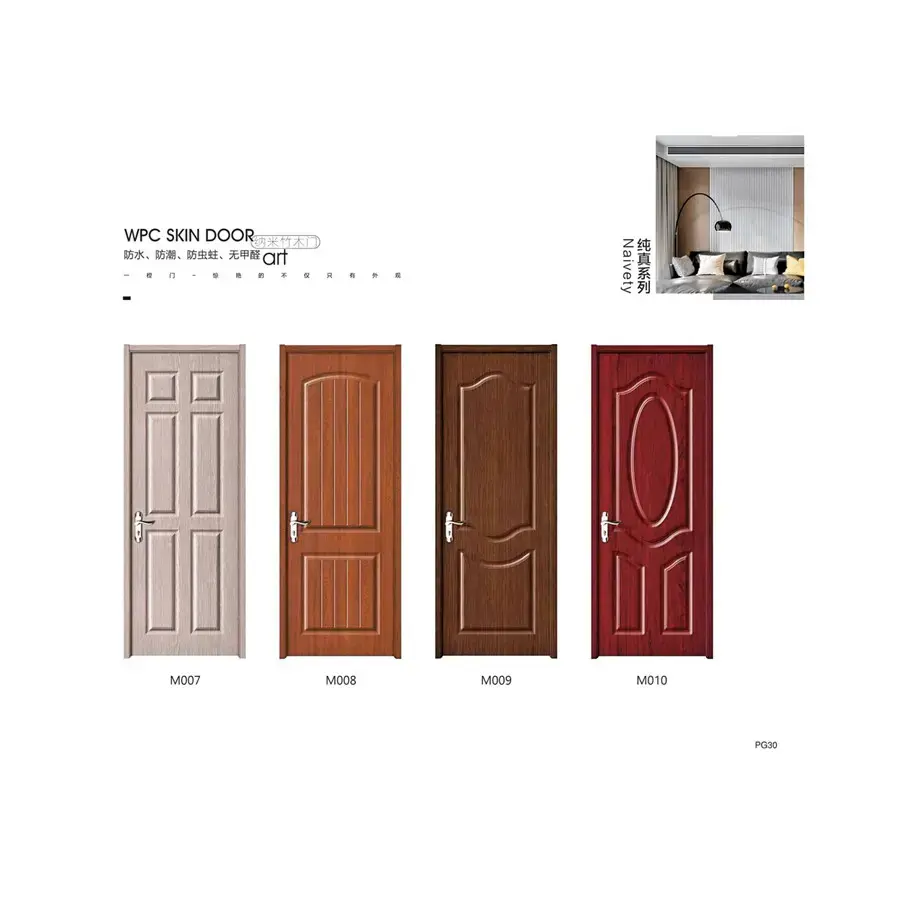
Summary: Master core parameters and make precise purchases to avoid pitfalls
The thickness of the door, the filling material and the fire resistance rating are the three most core technical parameters in the procurement of door products. To correctly interpret these parameters, it is necessary to combine the usage scenarios, performance requirements and relevant norms. One cannot rely solely on subjective judgment or unilateral introduction by the manufacturer. As a purchasing manager, only by thoroughly understanding the essential meanings of these parameters can one accurately screen products during the purchasing process, not only meeting the actual needs of the project but also effectively controlling procurement costs and avoiding safety hazards and economic losses caused by incorrect parameter interpretation.
It is hoped that this technical manual can provide practical references for everyone's purchasing work. If you encounter more specific parameter issues during the actual procurement process, you are welcome to communicate and discuss at any time.