



Various door service providers



How to scientifically select a project based on its type (residential/hotel/hospital)?
In construction projects, doors are not only components that separate Spaces, but also core carriers of functionality, safety and aesthetics. For decision-makers responsible for door category procurement, when faced with the demands of different types of projects such as residences, hotels, and hospitals, how to precisely match the type, material, and performance parameters of doors directly affects the overall quality and long-term usage cost of the project. This article will start from three typical scenarios to analyze the key logic and technical points of scientific door selection, and help establish an efficient and suitable procurement plan.
First, residential projects: A fundamental choice that balances practicality and economy
The core demands for residential doors revolve around "convenience of daily use", "basic security protection" and "cost controllability". When purchasing, the following dimensions should be given special attention:
1. Functional positioning segmentation
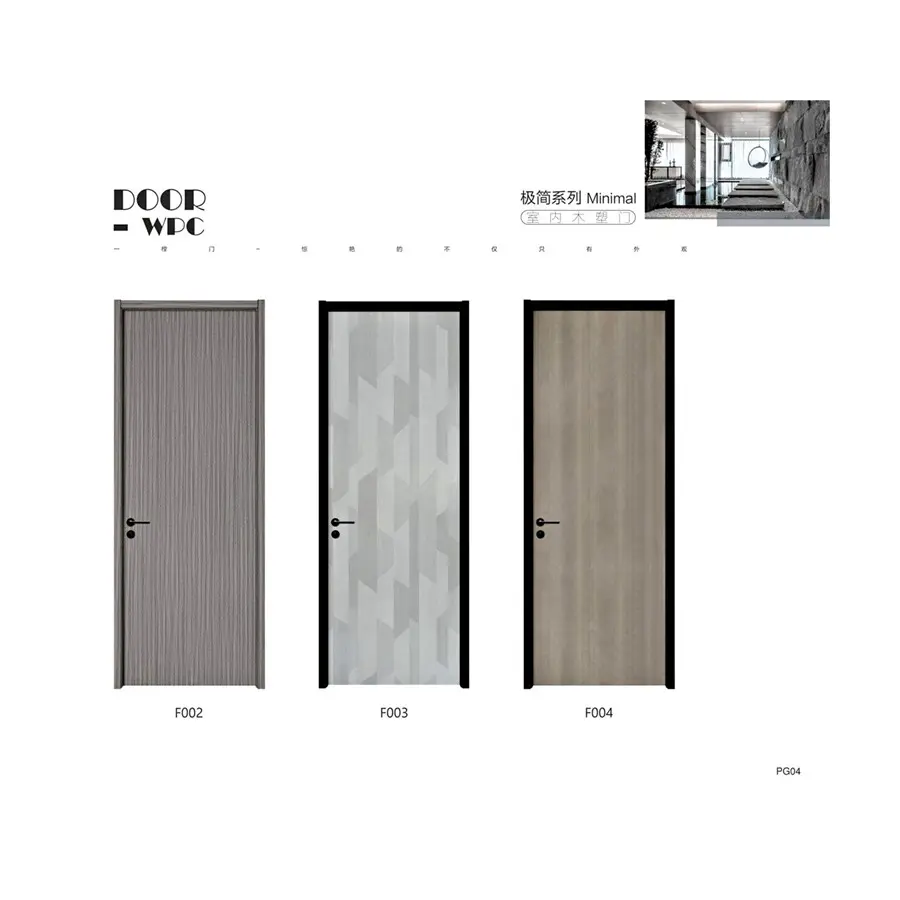
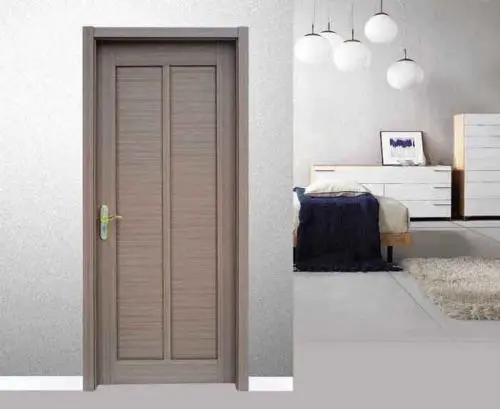
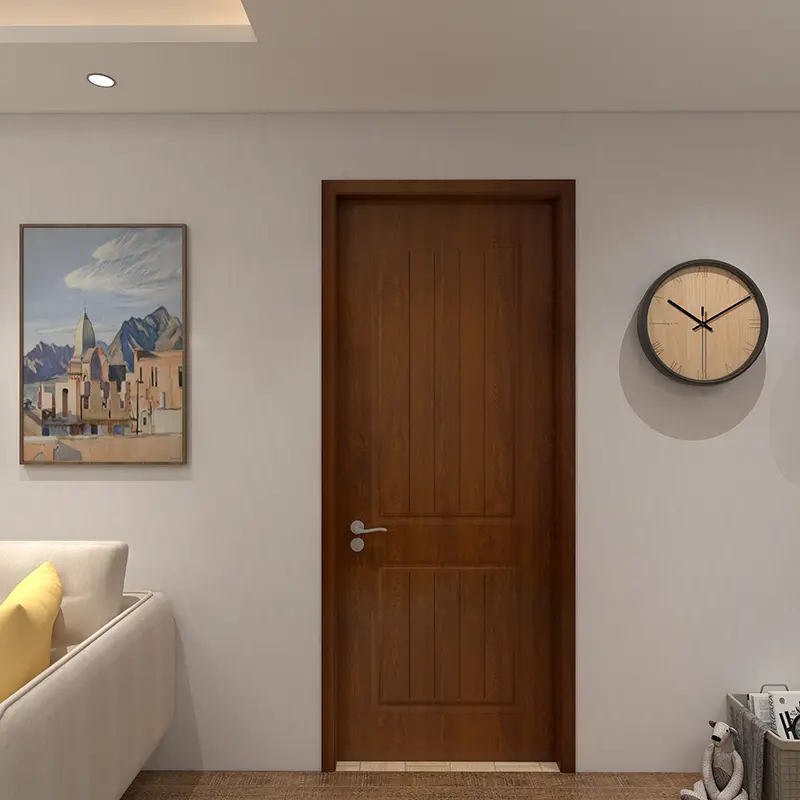
Residential doors can be classified according to their usage scenarios as follows: entrance doors (mainly for safety protection), Interior Doors (balancing sound insulation and privacy), and balcony doors (meeting the needs of lighting and ventilation). Among them, the proportion of entrance doors is the highest (about 40% of the total purchase volume), and they need to give priority to meeting the requirements of anti-theft and impact resistance. Interior doors are mainly lightweight and easy to install, and are commonly found in non-load-bearing partition areas such as bedrooms and living rooms.
2. Material compatibility principle
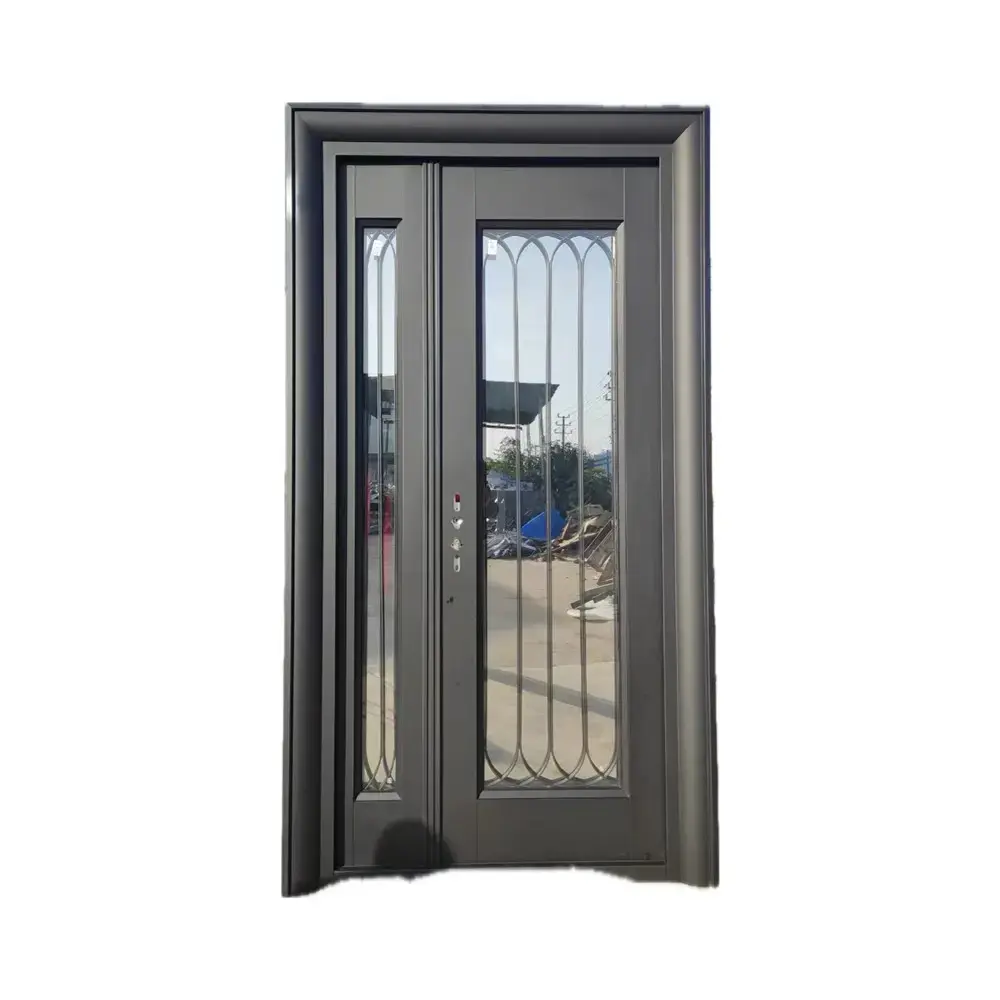
• Entrance door: The mainstream choice is Steel Door (accounting for over 60%), which has the advantages of high strength (anti-destruction time ≥15 minutes, meeting the anti-theft standards of most countries), fire resistance (fire resistance limit ≥30 minutes), and the surface can achieve diverse appearances through powder coating or film coating. Composite material doors (such as steel-wood composite ones) take into account both lightweight and thermal insulation, making them suitable for ordinary residences with average sound insulation requirements.
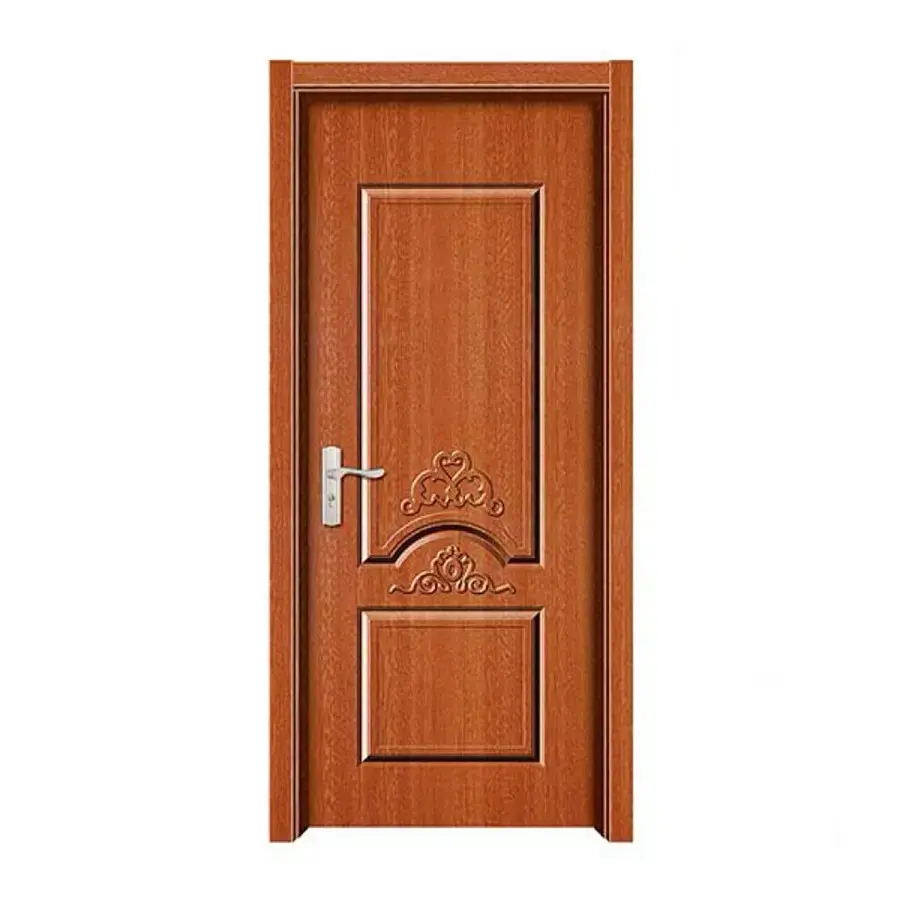
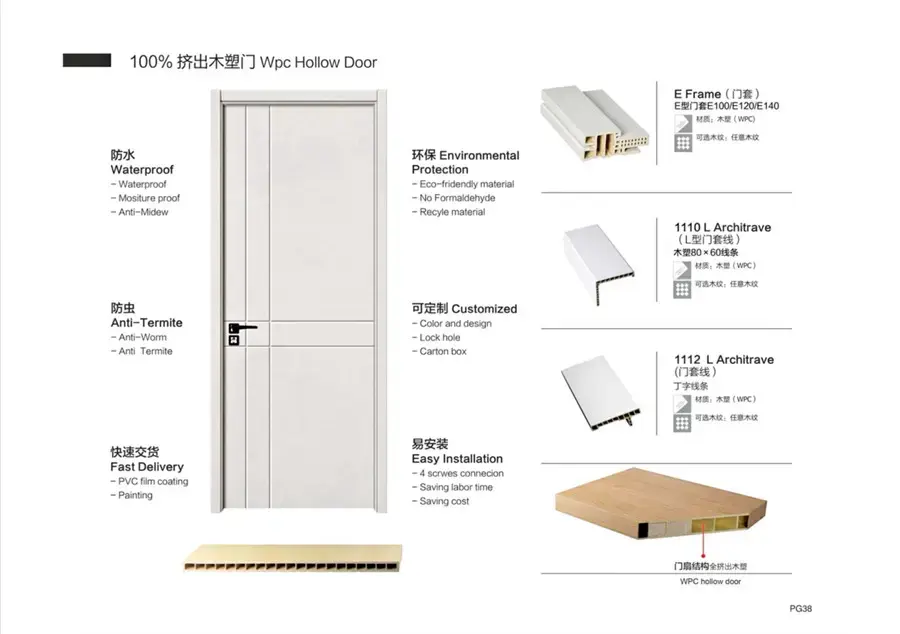
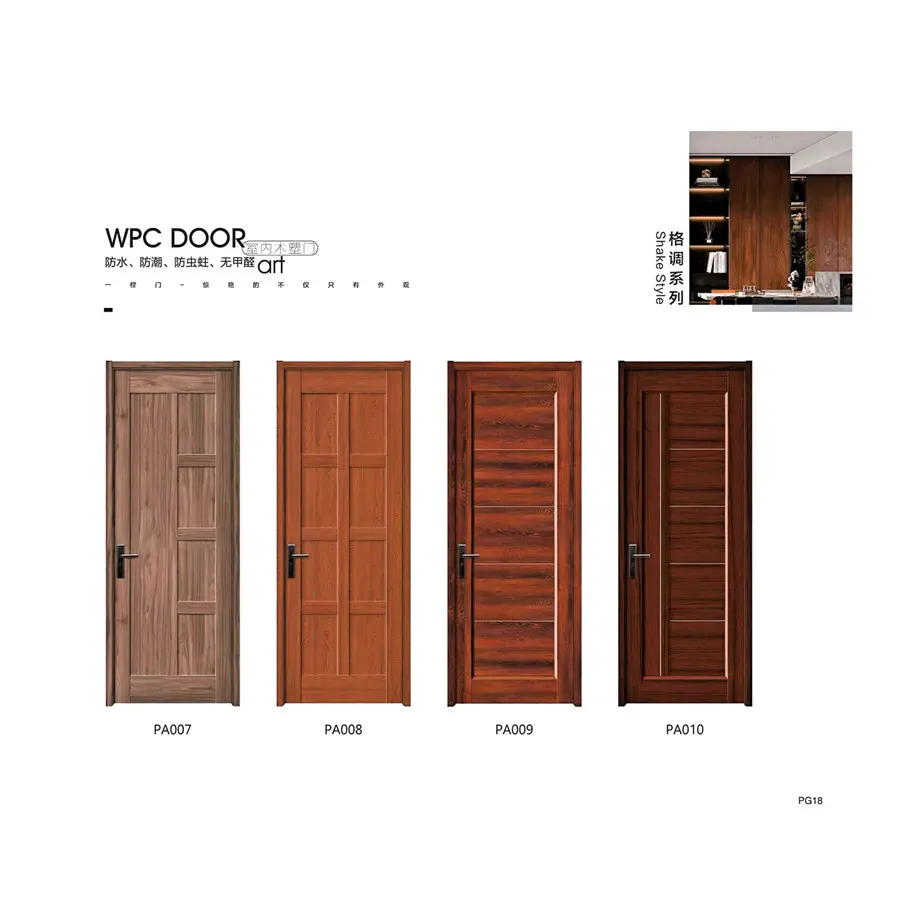
• Interior doors: Mainly solid wood composite doors(with density board as the base material and solid wood veneer), taking into account stability (less prone to deformation) and economy (cost is about 50%-70% of pure Solid Wood Doors). Moisture-proof doors (with moisture-proof agents added to the base material or waterproof coatings applied to the surface) should be selected for damp areas such as bathrooms and kitchens.
3. Basic performance requirements
The general standards for residential doors include: air sound insulation ≥25dB (to ensure basic privacy), hardware load-bearing capacity ≥50kg (to ensure the door leaf does not deform over long-term use), and surface wear resistance ≥400 turns (to resist daily friction). For high-rise residential buildings, additional attention should also be paid to the fire resistance rating of the door (such as GB 8624 B1 grade) and the escape function (in some areas, it is required that the entrance door be equipped with an emergency opening device).
Second, hotel projects: High-frequency usage scenarios that balance aesthetics and durability
The usage frequency of hotel doors is extremely high (a single door can be opened and closed 20 to 30 times a day), and they need to meet the differentiated demands of different functional areas (such as the privacy of guest rooms and the guidance of people flow in public areas). When purchasing, it is necessary to start from "durability", "style compatibility" and "maintenance convenience".
1. Differentiated configuration of functional areas
• Guest room door: The core requirements are sound insulation (air sound insulation ≥35dB to ensure guest privacy), privacy protection (frosted glass or anti-peeping film can be selected for the observation window), and surface stain resistance (fingerprints and water stains tend to accumulate in high-frequency contact areas). In terms of material, steel doors (with decorative panels) or solid wood composite doors (with wear-resistant paint on the surface) are the mainstream choices. The door locks need to support opening by electronic cards or passwords (to improve management efficiency).
• Corridor door/elevator shaft door: It focuses on fire prevention and evacuation functions (fire resistance limit ≥60 minutes, in compliance with building fire protection regulations), and usually adopts steel fireproof doors (with a flat surface design to reduce dust accumulation), paired with observation Windows (tempered glass, thickness ≥6mm) for easy observation in emergency situations.
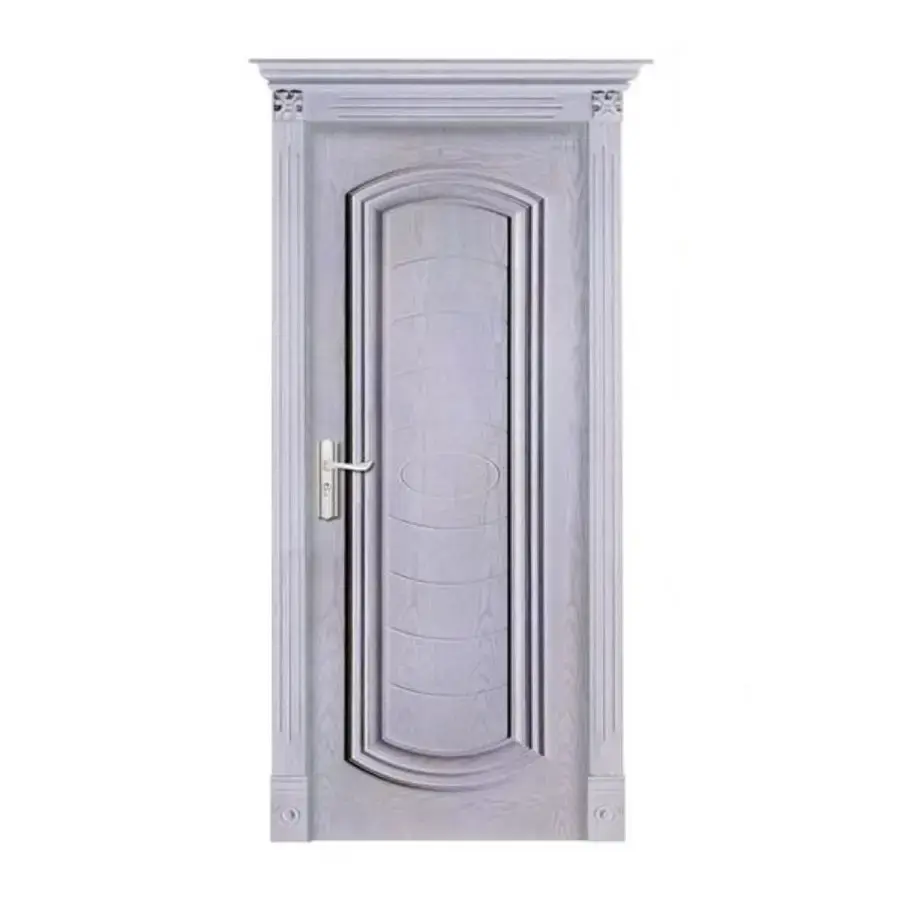
• Lobby/restaurant door: Emphasize decorative and pedestrian guidance (such as revolving doors or automatic sensor doors). Materials can be solid wood (such as walnut, oak) or metal (such as stainless steel + glass combination), and need to be in harmony with the overall decoration style (such as modern minimalist, European classical, etc.).
2. Enhanced durability design
The frequent use of hotel doors places higher demands on hardware components: hinges must be made of stainless steel (with a load-bearing capacity of ≥100kg and rust resistance), and door closers should support a slow-closing function (to avoid impact noise). It is recommended to install anti-collision strips along the edge of the door leaf (to reduce wear and tear during daily opening and closing). In terms of surface treatment processes, electrostatic spraying or UV-curable paint is more scratch-resistant (with a wear resistance of ≥800 revolutions) than traditional paint and is less likely to fade over long-term use.
3. Maintenance and cleanliness friendliness
The cleaning frequency of hotel doors is usually 1-2 times a week, so the material should be easy to maintain: steel doors or glass doors with smooth surfaces (without grooves) can quickly wipe off stains. For solid wood doors, it is necessary to choose a coating with good sealing performance (to prevent penetrating stains from adhering). In addition, the modular design of door locks and hardware (such as quickly replaceable lock cores) can reduce the cost of later maintenance.
Third, hospital projects: Special requirements for strict hygiene and safety standards
The usage environment of hospital doors is special (frequent contact, frequent disinfection, and strict infection control). When purchasing, priority should be given to meeting the three core requirements of "hygiene protection", "barrier-free passage", and "emergency function".
1. Hygiene and antibacterial properties
The surface material of hospital doors should have anti-pollution and easy-to-clean properties: antibacterial coated steel plates (such as antibacterial layers with added silver or copper ions to inhibit common bacteria like Escherichia coli and Staphylococcus aureus), PVC-coated doors (seamless design to prevent dust accumulation), or stainless steel doors (no pores, resistant to disinfectant corrosion) are preferred. The surface treatment should avoid concave and convex textures (to prevent bacteria from hiding), and the gap width should be controlled within 1mm (to reduce dirt retention).
2. Accessibility and safety design
To facilitate the passage of equipment such as wheelchairs and hospital beds, the clear width of hospital doors should be ≥900mm (for ward doors) or ≥1200mm (for emergency passage doors), and the weight of the door panels should be lightweight (for steel doors, the weight can be reduced through a hollow structure or an aluminum alloy frame can be selected). The preferred opening methods are sliding doors (to save space) or automatic sensor doors (to reduce contact transmission). The door closer should support slow opening and closing (to avoid colliding with patients or equipment).
3. Special function adaptation
Clean areas such as operating rooms and icus should be equipped with airtight doors (with an air leakage rate of ≤1.5m³/(h·m²) to maintain a positive pressure environment indoors). The radiology department should have radiation protection function (lead plate composite structure, lead equivalent ≥2mmPb). The doors of the infectious disease area need to support rapid disinfection (surface resistant to ultraviolet rays and corrosion by chlorine-containing disinfectants), and be equipped with observation Windows (double-layer glass, filled with inert gas in the middle to enhance heat insulation).
4. Durability and long-term stability
The high-frequency disinfection of hospital doors (multiple times a day) and contact with chemical reagents (such as alcohol, hydrogen peroxide) require the material to have strong chemical resistance: stainless steel doors (304 or 316 material) or anti-corrosion coated steel plates are the preferred choices. The hardware should be made of 316 stainless steel or chrome-plated (to prevent rust). The lifespan of the hinges and locks should be no less than 100,000 times of opening and closing (the hardware of ordinary doors is usually 30,000 to 50,000 times).
Fourth, The core logic of scientific subject selection
The demand for doors in different types of projects essentially lies in the difference of "functional priority" : residential projects focus on basic safety and economy, hotel projects emphasize the balance between aesthetics and durability, while hospital projects concentrate on strict standards of hygiene, safety and special functions. When making purchases, it is necessary to conduct a comprehensive assessment based on the characteristics of the scene from three dimensions: material, performance parameters, and maintenance costs, rather than merely pursuing low prices or appearance.
Mastering this scientific door selection methodology means being able to provide precisely matched door solutions for different projects - this is not only the key to reducing long-term operation and maintenance costs, but also the core competitiveness for enhancing the overall quality of buildings and user experience.