



Various door service providers
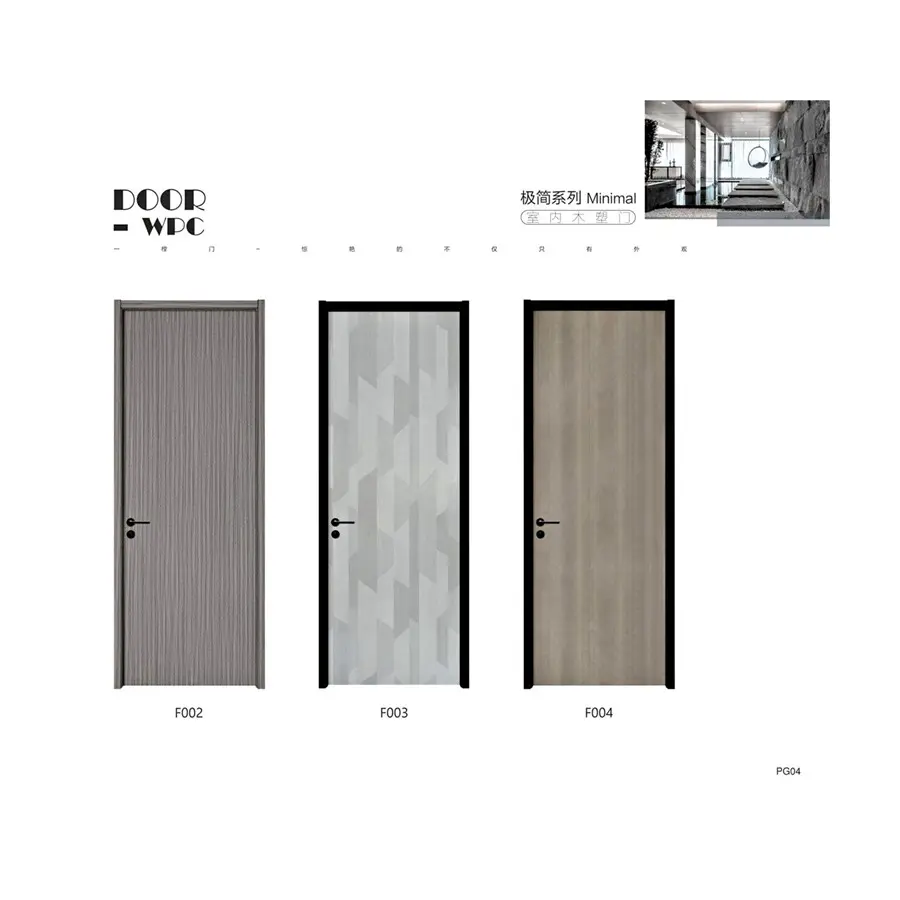
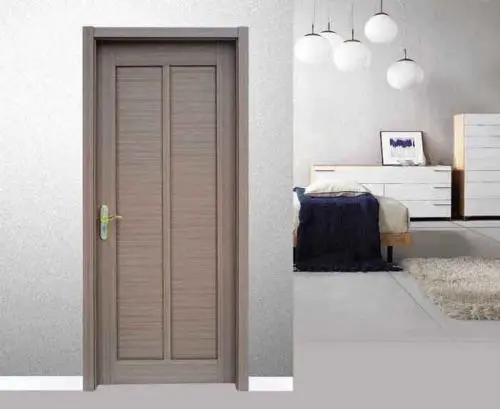
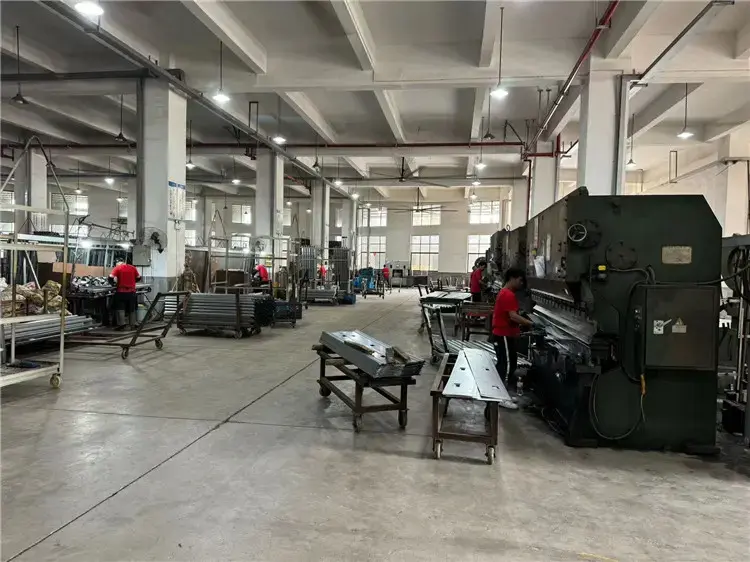
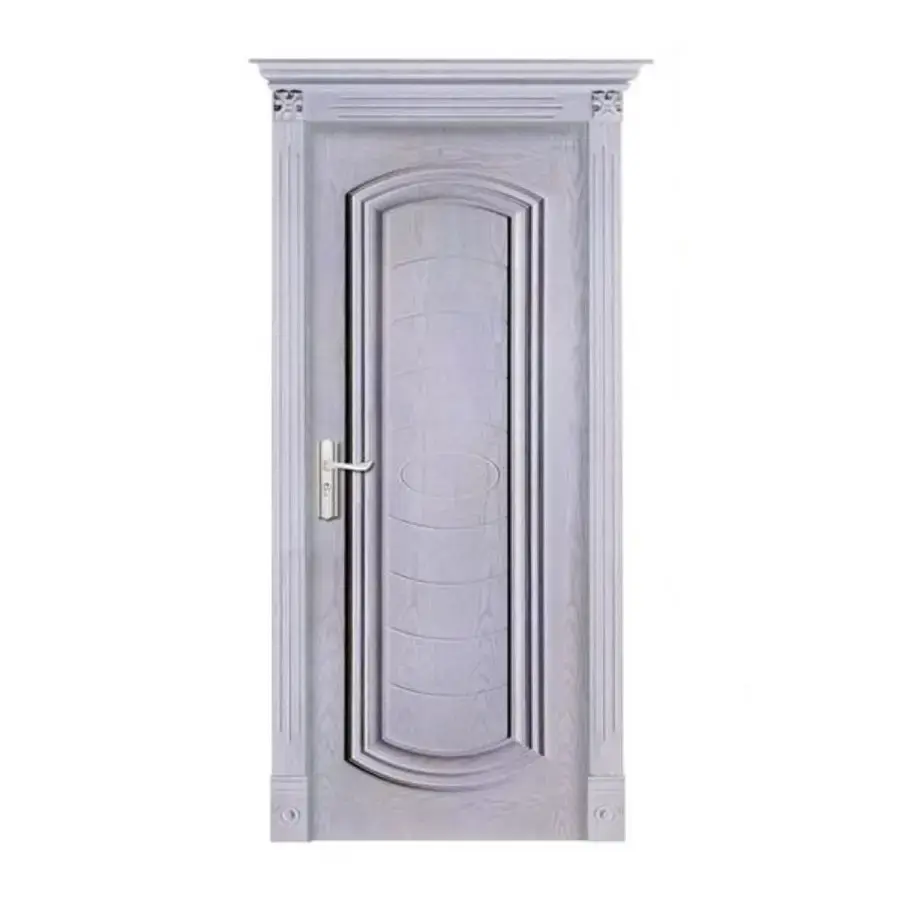



Analysis of the Seamless Covering Process Characteristics of Wood-Plastic Veneer Doors
Analysis of the Seamless Covering Process Characteristics of Wood-Plastic Veneer Doors
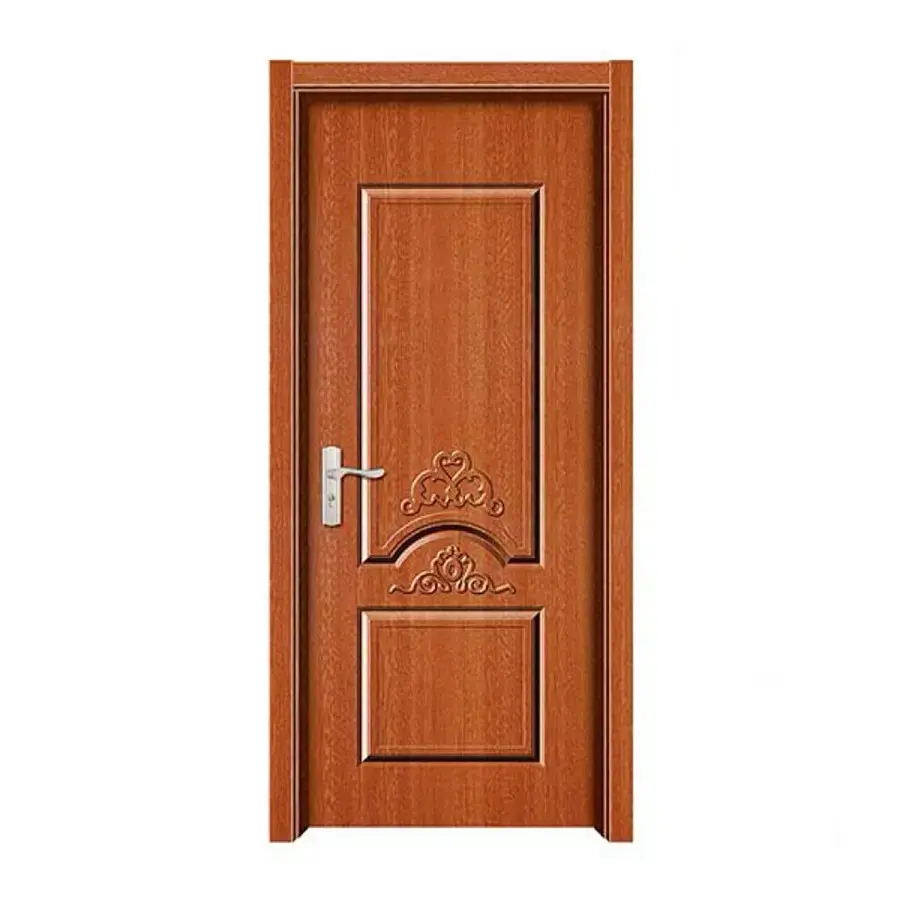
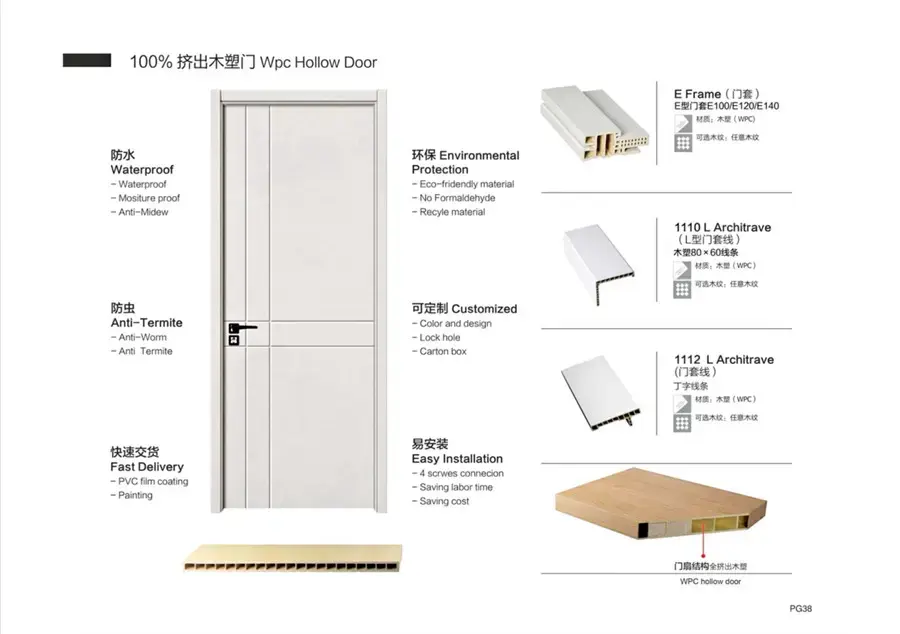
In the workshop, rolls of decorative film with wood grain texture are sent into the production line. A few minutes later, the surface of the door panels that come out shows no trace of seams or edge banding. This almost magical seamless covering process is reshaping the competitiveness of wood-plastic doors in the engineering market. It has solved the chronic problems of traditional laminated doors such as easily lifting edges and delamination at corners, enabling wood-plastic doors to truly possess surface integrity that can compete with high-end Solid Wood Doors.
Co-extrusion molding: "bonding" is completed in the molten state
The core logic of seamless cladding is to advance the timing of the combination of the surface decorative layer and the WPC base material from "post-processing" to "the moment of extrusion molding". While the twin-screw co-extrusion die head extrudes the wood-plastic base material from the main machine, the side feeding system precisely extrudes the 0.3-0.5 mm thick molten decorative film material simultaneously. The two layers of materials are still in a semi-molten state at the die lip outlet, with molecular chains penetrating each other. After cooling, they form chemical bonds rather than simple physical pressing.
This process has extremely strict control over the temperature window. The extrusion temperature of the base material is usually set at 165-175℃, while the melting temperature of the surface coating material should be 8-12℃ lower to ensure that the viscosities of the two layers of materials match, allowing them to blend without mixing. The production line data of a certain manufacturer in Anhui Province shows that when the temperature deviation exceeds 3℃, the interface bonding strength will drop by more than 40%. Therefore, the real-time closed-loop feedback between the in-mold pressure sensor and the infrared temperature probe has become a standard configuration to ensure the stability of quality.
"Invisible" treatment of corners and edges
The traditional covering process requires additional pressure strips or edge banding strips on the four sides of the door leaf for sealing, which not only disrupts the visual integrity but also poses a risk of water vapor intrusion. The seamless coating adopts 3D vacuum adsorption transfer printing. On the door leaf blank after extrusion and cooling, the decorative film with adhesive backing is completely adhered to the complex surfaces such as concave and convex grooves and arc corners through negative pressure. The key point is that the negative pressure value is not constant but automatically increases by 15-20 kpa at the corner to ensure that the membrane material's stretch ratio is controlled within 12%, preventing whitening or cracking.
A more refined approach is laser micro-etching pretreatment. Before coating, a CO₂ laser was used to carve a grid texture with a depth of 0.1 millimeters along the edge of the door leaf, increasing the surface energy. This reduced the contact Angle of the film material's adhesive back from 85 degrees to 32 degrees, significantly enhancing its wettability. This treatment is invisible to the naked eye, but it can increase the edge peel strength from the conventional 18N/cm to over 34N/cm, meeting the long-term usage requirements in high-humidity environments.
The "hidden" knowledge of material proportioning
The durability of seamless wrapping is 70% dependent on the toughness of the base material formula. If the particle size distribution of wood powder is too narrow, microscopic unevenness will occur on the surface of the extruded board, and bubble points will form after coating. A reasonable approach is to adopt a bimodal distribution - 60-mesh wood powder accounts for 70% and 120-mesh fine powder for 30%, which not only ensures rigidity but also fills the micro-pores.
The choice of coupling agent is equally delicate. Titanate coupling agents have a significant interface improvement effect on PVC-based WPC, but they are prone to decomposition and the generation of small molecules at high coating temperatures, causing the membrane material to bulge. Although silane coupling agents react slowly, they can withstand processing temperatures above 210℃ and are more suitable for seamless coating systems. A comparative test conducted by a factory in Jiangsu Province revealed that after 1000 hours of testing in an 85 ° C /85%RH aging chamber, the adhesion retention rate of the film material of the samples using the silane system still reached 92%, while that of the titanate system was only 67%.
"Non-standard" observation points for quality control
When making B2B purchases, in addition to the conventional peel strength and scratch resistance tests, two hidden indicators should also be given attention.
The first is the surface retention rate after thermal cycling. The sample was cycled 50 times between -20℃ and 60℃ to observe whether the membrane material shrank and turned white at the four corners. The shrinkage rate of high-quality craftsmanship should be less than 0.3mm/m, which is attributed to the precise matching of the linear expansion coefficients of the base material and the membrane material. The purchaser may request the supplier to provide a synchronous thermal analysis (DSC) curve to see if the glass transition temperatures of the two are close.
The second is the water vapor permeability resistance at the edges. Seal the four sides of the door leaf with aluminum foil tape, leaving only one edge exposed to a high-humidity environment. After 72 hours, tear off the film material and observe whether the adhesive layer has hydrolyzed and become sticky. This test simulates the extreme situation where the bathroom door is exposed to moisture for a long time. Many products that can pass the immersion test fail here.
The "accounting" logic of engineering value
For real estate centralized procurement or hotel projects, the true appeal of seamless cladding lies in its maintenance-free nature after installation. The edge delamination of traditional door panels is a major area of customer complaints. Maintenance requires disassembly and replacement, with the cost of a single door exceeding 200 yuan. During the five-year warranty period of the seamless covered door, the return rate for such repairs is almost zero. The purchasing director of a certain North China chain hotel group disclosed that after adopting the seamless wrapped WPC door, the annual maintenance budget decreased by 37%. Although the purchase price per door was 15% higher, the total life cycle cost actually decreased.
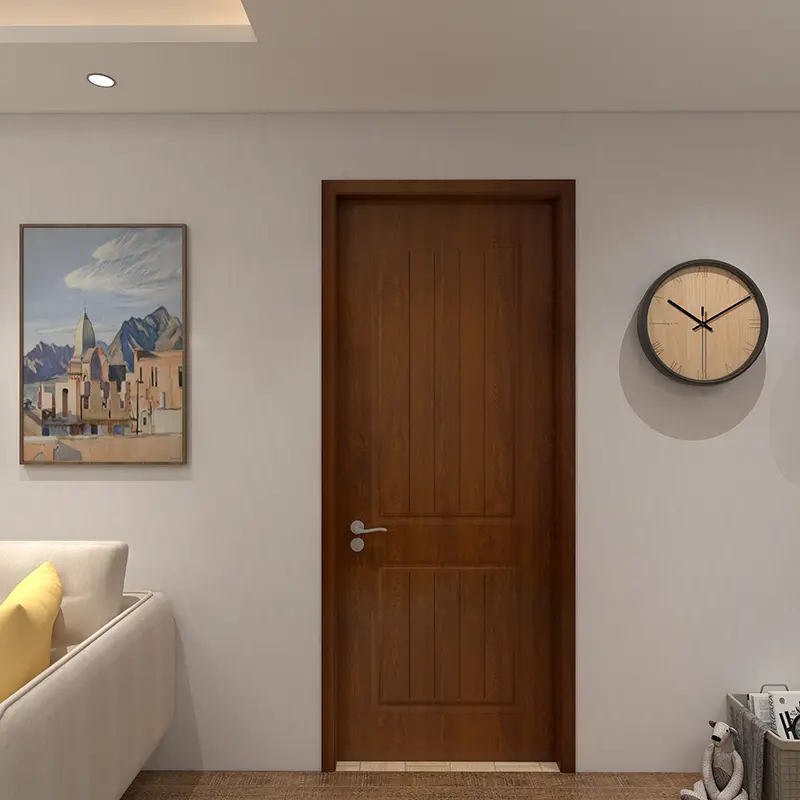
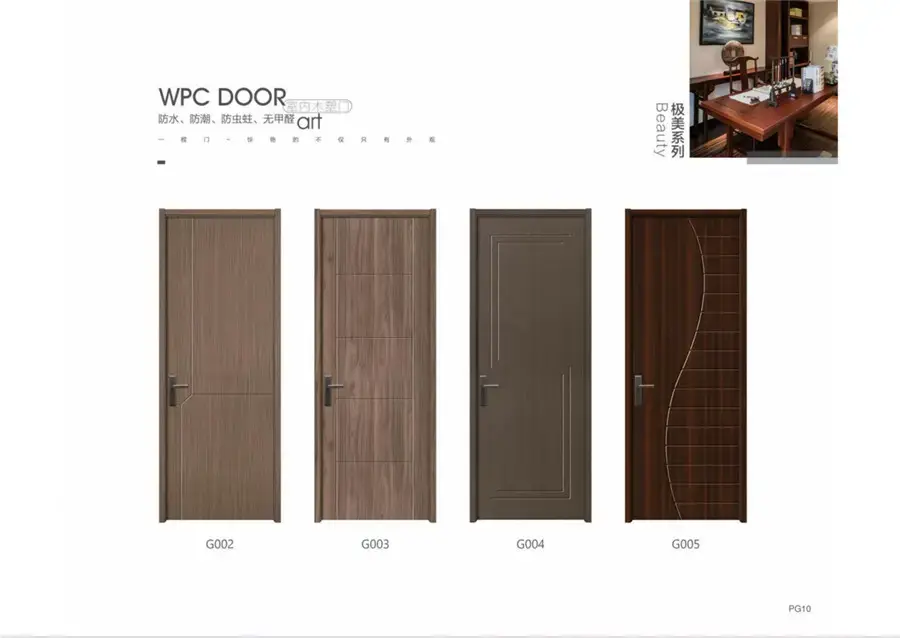
Another underestimated value is the freedom of design. There is no need to consider the width limit of the edge banding. The door leaf can achieve an extremely narrow frame design of 5mm, and when combined with hidden hinges, it perfectly matches the modern minimalist style. This aesthetic premium has enabled Wpc Doors to enter the high-end fully-furnished market and shake off the label of "cheap alternatives".
Written beneath the wood grain texture
The seamless covering process has upgraded wood-plastic doors from "functional products" to "detailed products". When the procurement manager assesses suppliers, it might be a good idea to walk into the workshop, touch the edge of the freshly rolled door leaf, and feel whether the membrane material and the base material are as smooth as one. Smell the cutting surface. The pungent odor left by inferior adhesives should be completely absent in high-quality processes.
In this competition about "invisible technology", the ultimate winner is not the one with the lowest cost, but those players who are willing to continuously invest in die head design, negative pressure curves, and coupling agent formulas. For them, every seam that is eliminated is a silent commitment to the engineering market.