



Various door service providers

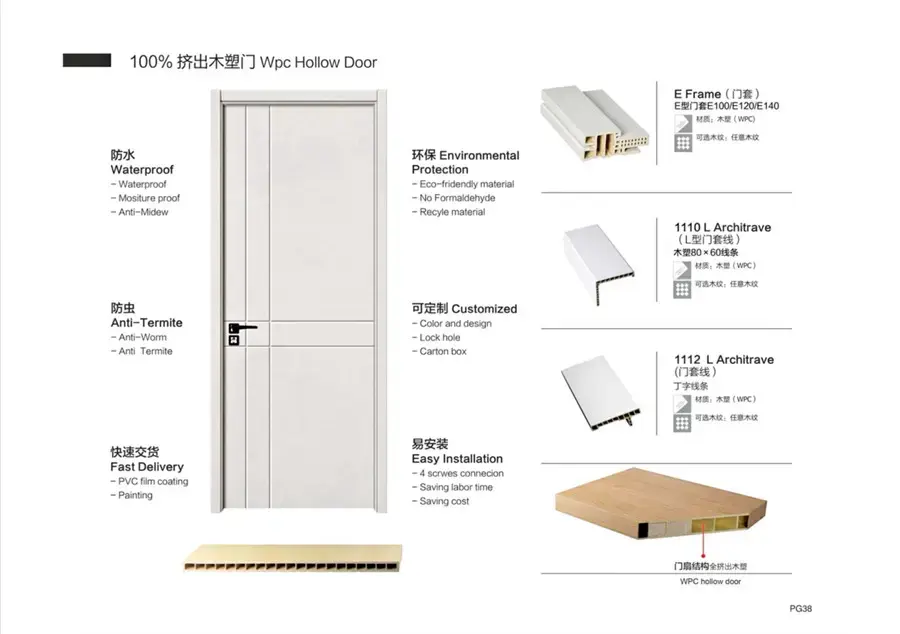




Aluminum alloy bathroom doors: Why are They a wiser choice in terms of impact resistance
When choosing a bathroom door, aesthetics, moisture resistance and durability are the core considerations. Traditionally, glass doors have been favored for their modernity, but when it comes to long-term durability and impact resistance, aluminum alloy bathroom doors demonstrate unparalleled advantages. For projects that pursue outstanding performance and safety, understanding the intrinsic structural strength characteristics of aluminum alloys is the key to making the right purchasing decisions.
From the perspective of materials science: Intrinsic Toughness and rigidity
The essence of impact resistance is the ability of a material to absorb energy and resist fracture or permanent deformation when subjected to sudden external forces. Although glass has been tempered to enhance its strength, it is still a brittle material in essence. This means that when the impact force exceeds its critical point, it will fail in a fragmented manner. Tempered glass does indeed break into small particles to reduce injuries, but the immediate loss of functionality is an unavoidable drawback.
In contrast, aluminum alloy, as a metallic material, possesses excellent ductility and toughness. When subjected to impact, aluminum alloy door frames and door panels can disperse and absorb the impact energy through slight elastic deformation. It does not attempt to resist head-on, but rather transmits force to the entire structural system through its own physical properties. This "absorption rather than fragmentation" mechanism ensures that in most daily collision scenarios, aluminum alloy doors will only produce minor dents or require no treatment, rather than catastrophic failure of the entire structure. The essential difference of this material lays a solid foundation for the impact resistance of aluminum alloy.
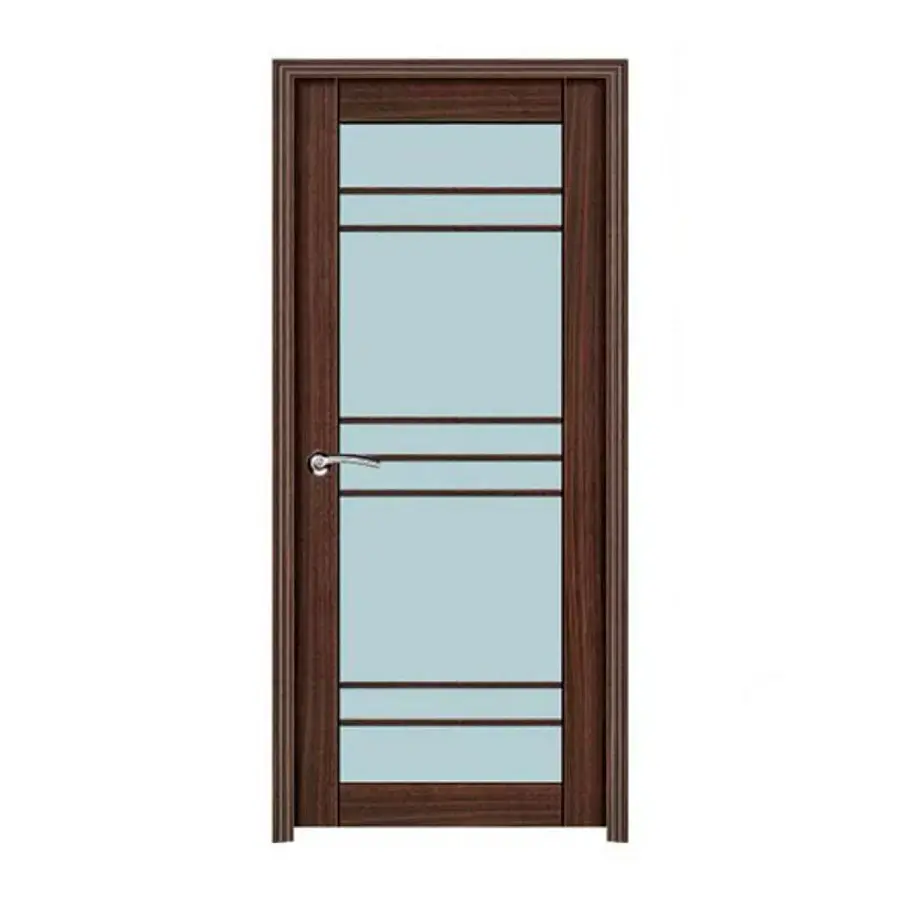
Structural integrity: The collaborative defense between the frame and the core material
The impact resistance of a door is not solely determined by the material of its panel, but is reflected in its overall structural design. Aluminum alloy bathroom doors usually use high-strength aluminum alloy profiles as the frame. These profiles are precisely extruded and their structural design can incorporate multiple reinforcing ribs, thereby achieving lightweight while providing extremely high section modulus and moment of inertia - all of which are key engineering parameters for measuring a material's resistance to bending and deformation.
More importantly, many high-end aluminum alloy bathroom doors will use internal filling materials, such as honeycomb aluminum cores or polyurethane foam. This design forms a composite structure similar to a "sandwich". When an impact occurs, the hard outer aluminum alloy panel first bears the initial force, and then the core material inside further absorbs and dissipates the energy through compression deformation. This synergistic effect greatly enhances the overall rigidity of the door and effectively prevents overall bending or twisting caused by impact. In contrast, pure glass doors lack this multi-level energy absorption structure, and their impact resistance is entirely dependent on the thickness of the glass itself and the level of heat treatment.
Dealing with real-life scenarios: Tests in both daily and extreme situations
In busy commercial or residential environments, bathroom doors are confronted with various impact threats. From accidental collisions with cleaning equipment, to the impact of items slipping, and even violent operations during improper use. Aluminum alloy doors can handle these challenges with ease. Their surfaces may only bear the marks of time, but this will in no way affect their basic functions and safety.
In a bathroom environment with high humidity and large temperature variations, the stability of materials also indirectly affects the durability of their impact resistance. The outstanding corrosion resistance of aluminium alloy ensures that its structural strength will not decline due to the erosion of moisture year after year. The frame will not rust or expand like some metals, and the connecting parts will not loosen, thus maintaining the structural tightness and integrity of the initial installation for a long time. A stable structure can naturally maintain its ability to resist impacts for a longer time.
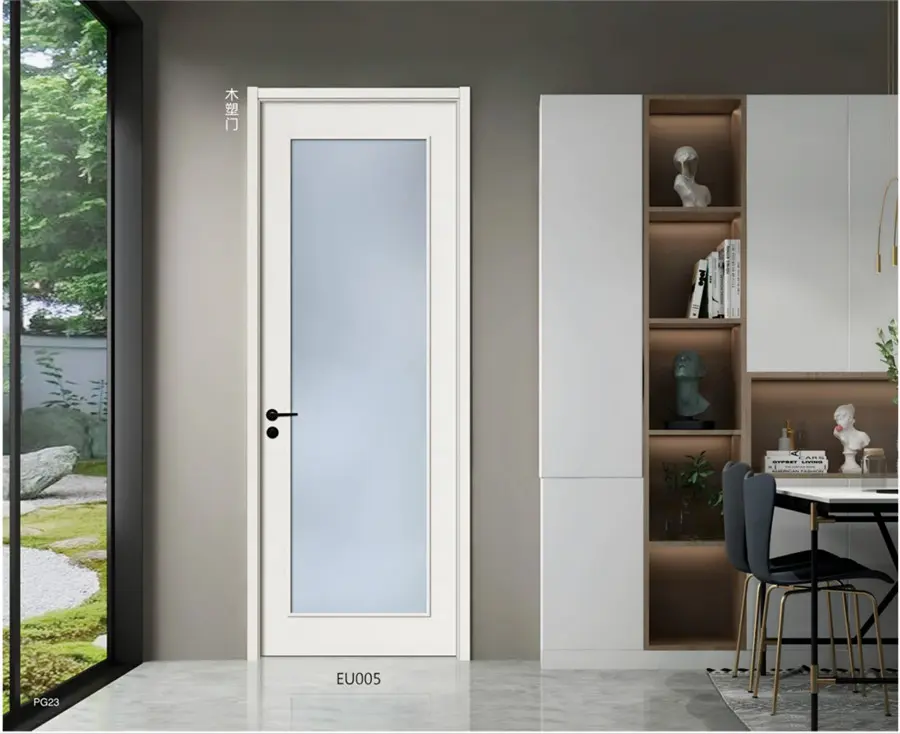
A long-term perspective on safety and maintenance
From a safety perspective, the impact resistance advantage of aluminum alloy doors directly translates into lower risks. It eliminates the risk of sharp glass fragments caused by accidental shattering, which is particularly important for families with children or the elderly, as well as public places with high foot traffic.
In terms of maintenance, this advantage is equally obvious. An aluminum alloy door that has suffered a slight impact usually does not require immediate repair. Even if it needs to be replaced, it is often processed in a modular way, which is more convenient. Once the glass door breaks, an emergency replacement of the entire board is necessary, which not only incurs higher costs but also causes usage interruption.
Conclusion
To sum up, although glass doors are attractive in terms of visual transparency, aluminum alloy bathroom doors offer a higher level of reliability, safety and long-term economy in the key performance of impact resistance. Its structural advantages based on materials science enable it to effectively resist various impacts in daily use and maintain long-term functional integrity. For decision-makers who value project quality, durability and ultimate customer satisfaction, choosing an aluminum alloy bathroom door is a wise investment that stands the test of time.