Best Stainless Steel Door Manufacturers in China
Choosing the best Stainless Steel Door manufacturers in China requires more than comparing catalogues and factory photos. China remains a major force in global steel production. The World Steel Association reported approximately 1.005 billion tonnes of crude steel production in China during 2024. The International Stainless Steel Forum recorded about 58.4 million tonnes of global stainless steel production in 2023, with China contributing roughly 36.7 million tonnes. These figures show manufacturing scale, but scale alone does not prove door quality.
A reliable manufacturer should demonstrate practical control over material grades, welding, surface finishing, and assembly tolerances. For coastal projects, 316 stainless steel may offer better chloride resistance than 304. However, the correct choice still depends on exposure, cleaning routines, and budget. Look for heat numbers, mill certificates, weld inspection records, and clear testing reports. A polished sample can hide weak hinges, uneven corners, or a thin internal frame. Small details matter.
Fire-rated, acoustic, security, and exterior doors also require different evaluation methods. Relevant documentation may include ISO 9001 certification, EN 16034 testing, EN 14351-1 compliance, or project-specific laboratory reports. Requirements vary by destination, so buyers should verify certificates independently. No ranking is flawless. Factory audits, sample inspections, and production videos often reveal more than a confident sales presentation. This guide compares Chinese manufacturers through documented experience, engineering capability, customization depth, export reliability, and after-sales support. It also recognizes an uncomfortable point: the cheapest quotation may become the most expensive decision after installation problems appear.
What Defines a Leading Stainless Steel Door Manufacturer in China
A leading stainless steel door manufacturer in China proves capability through consistent details, not attractive photographs alone. Experienced teams understand how door weight, frame tolerance, hinge capacity, and wall conditions affect daily performance. They select suitable grades, such as 304 for many interiors and 316L for demanding coastal environments. However, material choice should follow the project’s exposure, cleaning routine, and budget.
Reliable production includes controlled welding, accurate corner joints, smooth polishing, and stable hardware installation. During factory inspections, buyers should examine weld marks, edge alignment, gasket compression, and protective film quality. A serious manufacturer can provide material records, dimensional drawings, sample approvals, and test reports based on relevant standards. Clear communication matters too. Small misunderstandings about swing direction or handle height can create expensive site problems. No factory is perfect. Strong suppliers admit limits, record corrective actions, and improve their process instead of hiding defects.
Tips: Request a full-size sample when possible. Test the lock, hinges, and closing force repeatedly. Compare the approved sample with packed goods before shipment. Ask how damaged panels, replacement hardware, and installation questions will be handled. A dependable partner responds with evidence, timelines, and practical solutions. Look beyond the lowest quotation. Door performance depends on engineering discipline, inspection habits, and after-sales responsibility.
Key Types of Stainless Steel Doors Produced by Chinese Manufacturers
Best Stainless Steel Door Manufacturers in China
Chinese manufacturers produce several stainless steel door types for commercial, industrial, and residential projects. The International Stainless Steel Forum reported about 58.4 million tonnes of stainless steel production worldwide in 2023. China supplied roughly 36.7 million tonnes, creating a broad manufacturing base for door systems.
Common types include single-swing, double-swing, sliding, and automatic doors. 304 stainless steel suits offices, hotels, and indoor corridors. 316 stainless steel performs better near coastal air, laboratories, and chemical processing areas. Fire-rated stainless steel doors use insulated cores and tested hardware. Cleanroom doors often feature flush surfaces, rounded edges, and sealed frames. Hygienic details matter.
They also produce security doors, acoustic doors, and insulated exterior doors. A typical cleanroom model may use 0.8–1.5 millimetre stainless steel skins, depending on impact requirements.
Testing remains essential. ISO 9001 supports process control, but it does not prove every door’s fire or acoustic performance. Ask for current test reports, material certificates, welding records, and installation tolerances.
One practical warning. A polished surface can hide weak hinges or poor core bonding. This happens.
Project conditions should guide the specification. Coastal buildings need corrosion resistance, while hospitals need cleanable joints and reliable seals. Some suppliers offer impressive customization, but excessive options can reduce consistency. Reviewing a production sample and checking third-party test evidence is often wiser than trusting a catalogue alone.
How Chinese Stainless Steel Door Manufacturers Manage Quality and Safety
Chinese stainless steel door manufacturers manage quality and safety through controlled production, documented testing, and practical factory experience. They usually verify stainless steel grades, sheet thickness, weld penetration, hinge strength, and frame alignment before assembly. Material certificates help confirm composition and corrosion resistance. Traceability matters when several door sizes share one production order.
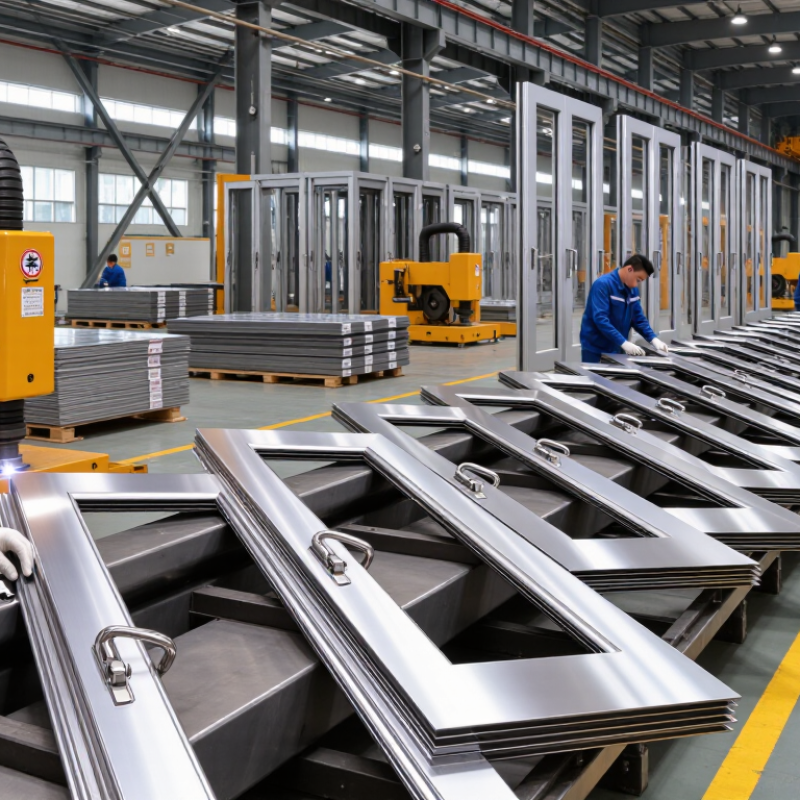
Experienced manufacturers use calibrated cutting, bending, and welding equipment. Skilled inspectors check surface defects, uneven gaps, sharp edges, and locking performance. Fire-rated or smoke-control doors require tested assemblies, not just attractive panels. Their results should match applicable project standards and be supported by clear test reports. Independent inspection can add confidence when the order is large or technically demanding.
Factory safety procedures also influence product reliability. Workers need training, protective equipment, and clear handling methods for heavy door leaves. Poor storage can scratch finished steel or distort frames before installation. Site measurements deserve equal attention. A precise factory cannot correct inaccurate wall dimensions.
No factory is flawless. A checklist may miss a problem hidden inside a welded joint. For this reason, responsible manufacturers welcome sample approval, production photos, staged inspections, and installation feedback. They should explain limitations instead of promising impossible performance. Quality is not only a polished surface; it is consistent evidence from material arrival to final adjustment.
How to Evaluate and Select the Right Manufacturer in China
Choosing a stainless steel door manufacturer in China requires more than comparing online photos and prices. Start with the factory’s actual production capacity. Ask for recent workshop images, material records, and sample doors with matching specifications. A polished showroom can mislead.
Evaluate the stainless steel grade, sheet thickness, core material, hinges, locks, and surface treatment. Request mill certificates and independent test reports when performance matters. Inspect welds closely. They should look even, clean, and properly finished around corners. Check whether the manufacturer can control dimensions within your required tolerances. Small errors may cause serious installation problems.
Communication is equally important. A reliable manufacturer should answer technical questions clearly and provide drawings before production. Ask for a sample, packaging photos, quality checkpoints, and a realistic production schedule. Factory audits can reveal storage conditions, equipment maintenance, and worker practices. Contact previous customers if possible. Their feedback may expose delays that brochures never mention.
Do not select the lowest quotation automatically. It may exclude testing, stronger hardware, or protective packaging. I would compare total cost, not only the unit price. No checklist is perfect. Even experienced buyers can overlook after-sales support. Put inspection rights, replacement terms, and delivery responsibilities in writing. A manufacturer that welcomes clear verification usually offers stronger long-term reliability.